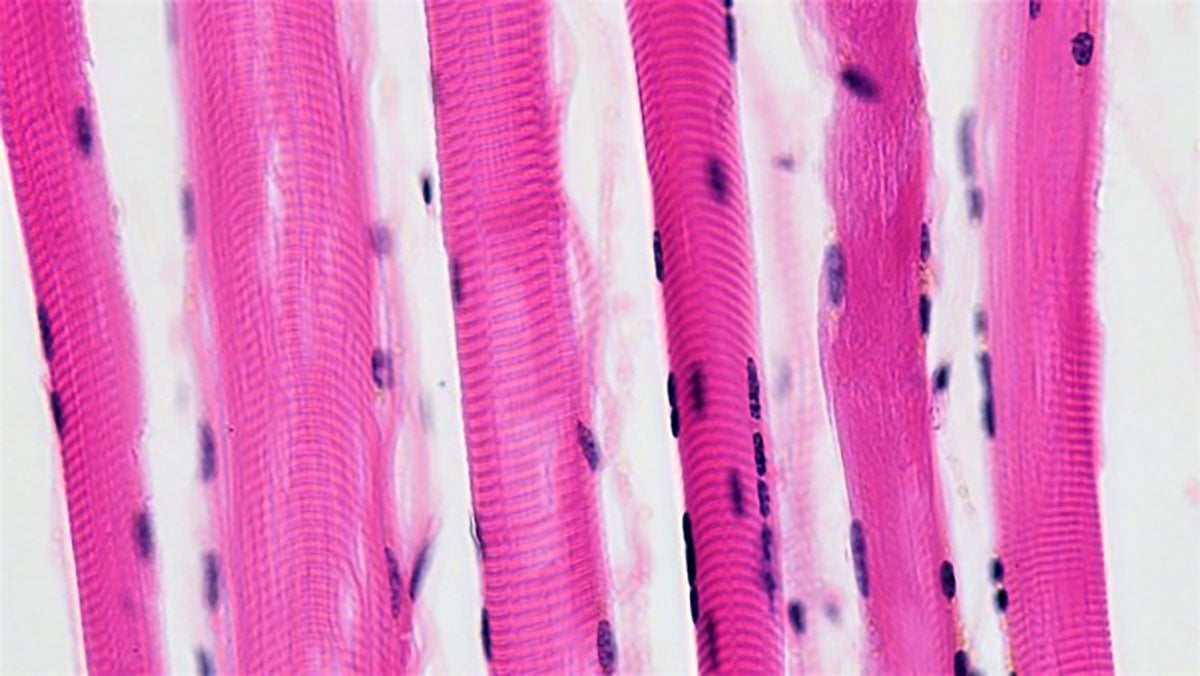


Pterostilbene, a compound discovered naturally in some meals, impacts how skeletal muscle mass course of fat by stabilizing a protein known as PPARδ and growing its signaling exercise.
Pterostilbene, a pure compound present in blueberries, grapes, and different berries, might assist muscle cells clear extra fats by defending a protein that regulates how they use it. Researchers in Japan discovered that the compound decreased fats buildup in cultured mouse skeletal muscle cells, with experiments pointing to elevated breakdown and use of saved lipids.
Extra fats inside skeletal muscle cells can intrude with their capability to make use of glucose and fatty acids effectively. Not like fats saved beneath the pores and skin, these intracellular lipid droplets can disrupt regular muscle operate. Excessive-fat diets, inactivity, and growing older can all drive this irregular buildup, referred to as myosteatosis. It reduces metabolic flexibility, the flexibility to regulate gasoline use, and contributes to insulin resistance, during which cells reply much less successfully to insulin.
The analysis staff, led by Affiliate Professor Takakazu Mitani of Shinshu College, traced pterostilbene’s results to peroxisome proliferator-activated receptor δ, or PPARδ. This receptor protein helps swap on genes concerned in burning fatty acids for power. Most experimental medicine designed to stimulate PPARδ bind on to it. Pterostilbene as a substitute protected the protein from the ubiquitin–proteasome pathway, the mobile system that tags proteins for disposal and breaks them down. Protecting extra PPARδ out there elevated its exercise in regulating genes related to lipid metabolism.
Pterostilbene didn’t forestall fatty acids from getting into the muscle cells. As a substitute, handled cells launched extra glycerol, an indicator of fats breakdown. Additionally they elevated the expression of genes concerned in fatty acid oxidation, the method of utilizing fatty acids for power. Collectively, these findings point out that the compound promoted each the breakdown of saved lipids and their subsequent use.

Pterostilbene outperformed the opposite compounds examined
Pterostilbene is a polyphenol, a sort of naturally occurring plant compound. Earlier analysis had related it with useful metabolic results within the liver and adipose, or fats, tissue, however its position in skeletal muscle was much less effectively understood. Researchers had additionally been exploring food-derived compounds as attainable regulators of PPARδ, although the molecular mechanisms remained unclear.
“We at the moment lack permitted therapies particularly concentrating on myosteatosis,” says Mitani. “This essential hole led our staff to display food-derived compounds for pure, dietary interventions. Through the screening, we recognized pterostilbene and centered our investigation on uncovering its exact mechanism of motion.”
The staff examined a panel of food-derived plant chemical substances in cultured C2C12 mouse skeletal muscle cells. Pterostilbene produced the strongest suppression of irregular intracellular lipid accumulation among the many compounds examined. It additionally maintained regular cell development and differentiation, the method by means of which cells develop their specialised muscle traits.
The analysis was made out there on-line on July 16, 2026, with publication scheduled for September 1, 2026, in Quantity 83 of Meals Bioscience.
Well being advantages stay unproven
“Our findings set up a scientific framework for creating useful meals and dietary dietary supplements that focus on muscle fats metabolism. Nonetheless, past the potential of pterostilbene itself, this work supplies an experimental framework for figuring out different pure compounds that may stabilize the PPARδ protein,” Mitani mentioned.
Whether or not these mobile results may assist forestall or deal with weight problems, kind 2 diabetes, or age-related metabolic decline stays unproven. Rigorous research in dwelling organisms are wanted to evaluate whether or not pterostilbene is efficient, protected, and selective in its motion on PPARδ earlier than these findings will be translated into dietary or pharmaceutical purposes.suppresses intracellular lipid accumulation in C2C12 myocytes by way of PPARδ stabilization” by Maaya Suzuki, Miu Iwasaki, Yasuki Higashimura, Tomohide Takaya and Takakazu Mitani, 16 July 2026, Meals Bioscience.
DOI: 10.1016/j.fbio.2026.109519